Anxiety
Automatic Thoughts
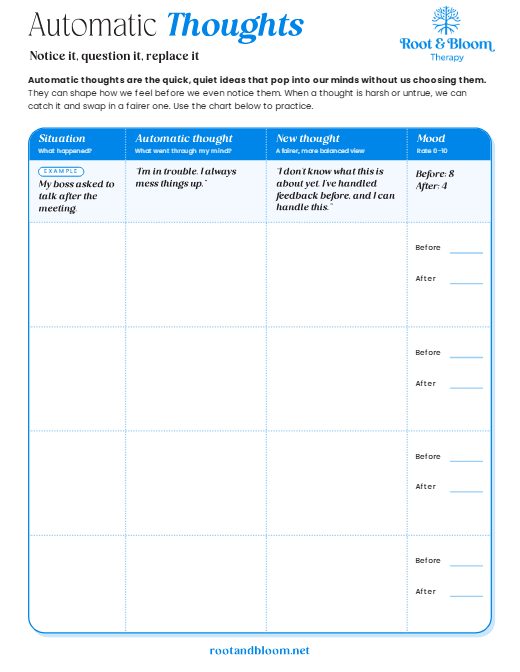
Learn to notice negative thoughts as they happen, question whether they're true, and replace them with more balanced ones. Use the chart to practice catching and changing unhelpful thinking patterns.
Free tools to use on your own or together with your therapist. Search by topic, or by what you’re going through.
9 resources
Learn to notice negative thoughts as they happen, question whether they're true, and replace them with more balanced ones. Use the chart to practice catching and changing unhelpful thinking patterns.
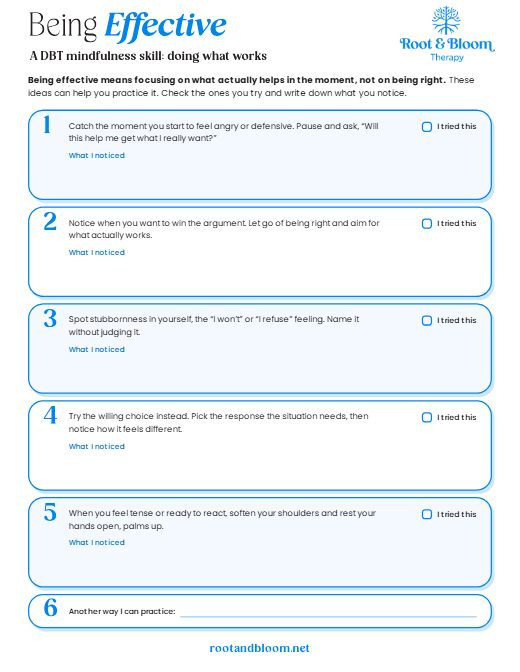
Learn a DBT mindfulness skill to focus on what actually works in the moment instead of being right, with practical exercises to practice letting go of defensiveness and stubbornness.
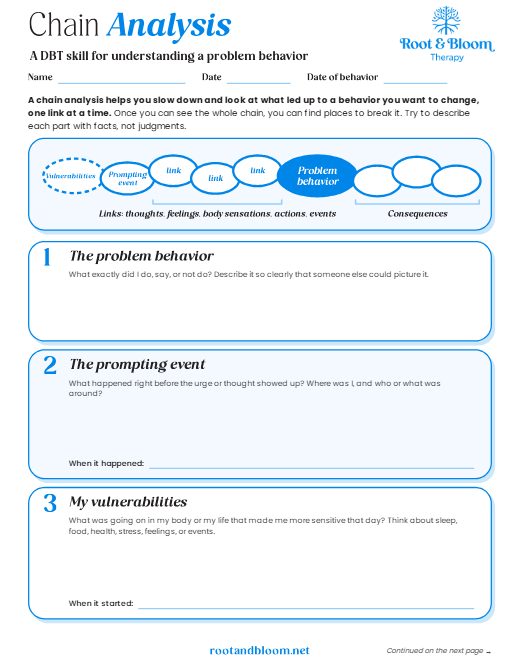
Track what led up to a problem behavior you want to change, step by step, so you can find places to interrupt the pattern and make different choices.
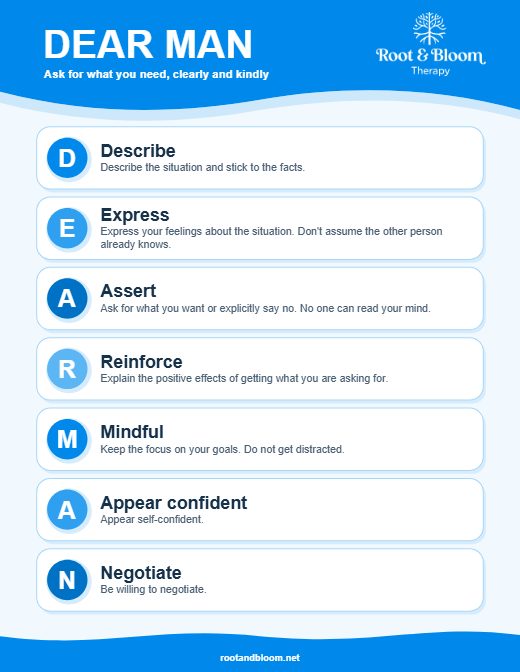
Learn a step-by-step skill to ask for what you need in conversations with others clearly, confidently, and kindly while staying focused on your goals.
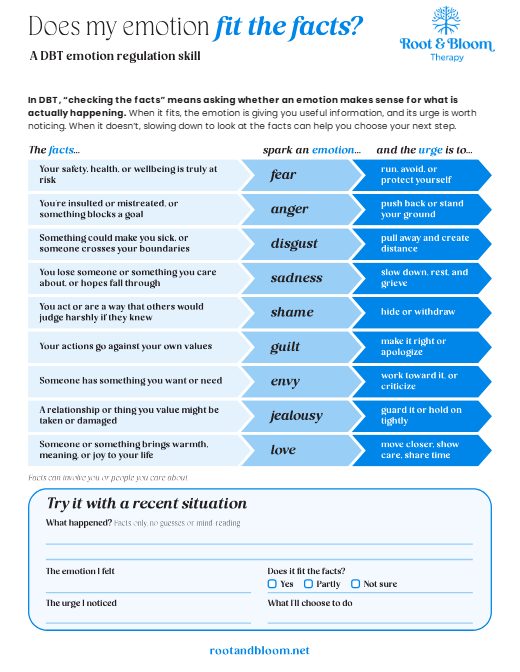
Learn to check whether your emotion matches what's actually happening so you can understand what your feelings are telling you and decide how to respond.
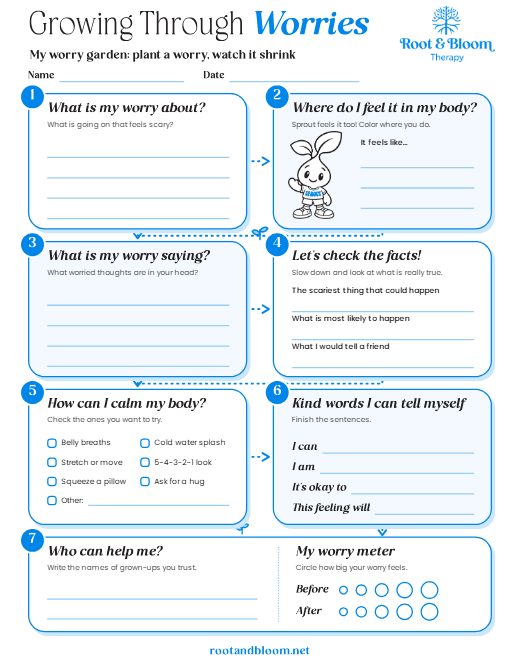
A guided worksheet for children to identify their worries, understand what they're feeling in their body, and learn calming strategies and self-compassion techniques to manage anxiety.
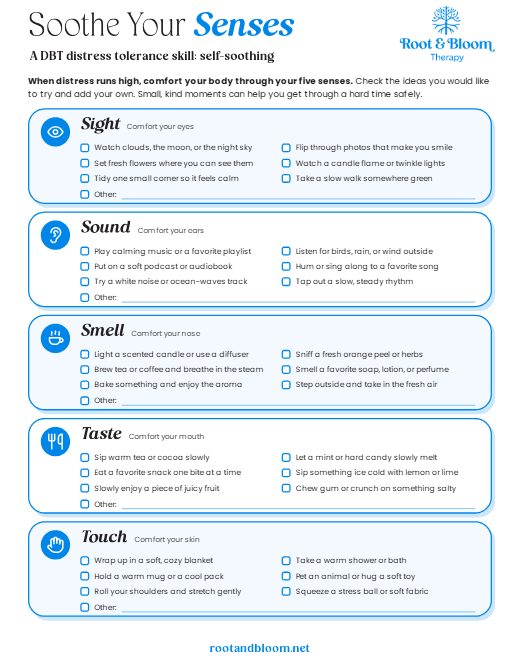
Learn to calm yourself when distress is high by comforting your body through your five senses. Explore practical self-soothing activities you can use to get through difficult moments safely.
Learn practical techniques to calm anxiety including cold temperature exposure, exercise, breathing exercises, and muscle relaxation. Also introduces grounding using the 5-4-3-2-1 sensory technique.
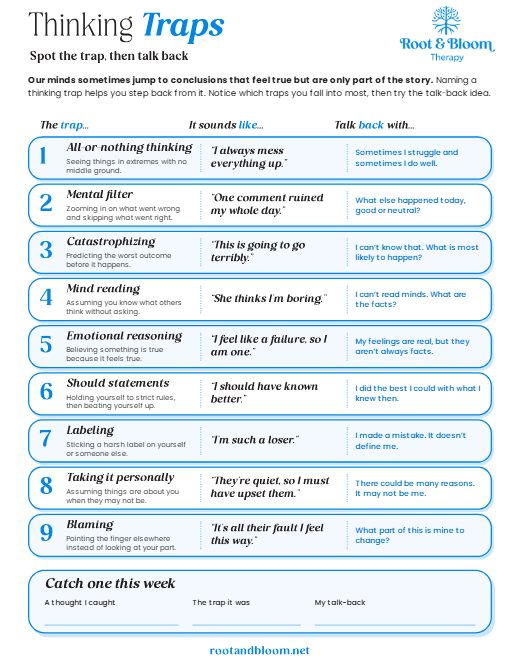
Learn to spot nine common thinking patterns that distort reality, then use simple talk-back techniques to challenge them and think more clearly.